Mars has always captured our curiosity. It’s red, mysterious, and filled with strange landscapes that look like something out of a sci-fi movie. But what if we told you some people believed Mars was destroyed by nuclear war millions of years ago? Sounds wild, right? Yet, this theory has fascinated many for decades.
Table of Contents
Now, NASA has spoken clearly on the subject — and science has an answer. But before we debunk the myth, let’s understand where it came from.
Origins
The idea that Mars once had life — and even civilizations — comes from data collected back in 1976. That year, NASA’s Viking 1 mission sent back an eerie photo of a rock formation in the Cydonia region that looked like a human face. That image, combined with strange chemical readings, gave birth to a theory that won’t seem to die.
One of the most notable voices pushing this theory was physicist John Brandenburg. He believed that the unusual presence of xenon-129 (a gas associated with nuclear explosions on Earth) and traces of uranium, thorium, and potassium pointed to artificial nuclear blasts on the planet.
His conclusion? Ancient Martians — named Cydonians and Utopians — were wiped out in a catastrophic event. Something like a nuclear Armageddon.
Evidence?

What made Brandenburg’s theory so compelling to some were the traces of radioactive materials and xenon isotopes found in the Martian atmosphere. These are real findings — but the interpretations are where science and speculation part ways.
Brandenburg proposed that Mars once had nuclear reactors or was hit by weapons like those we have on Earth. He even cited the face-shaped rock as proof of intelligent life. But most scientists, and NASA, don’t agree with any of that.
NASA’s Response
NASA has spent decades studying Mars. They now have rovers, orbiters, and satellites dedicated to analyzing the planet’s surface and atmosphere in detail.

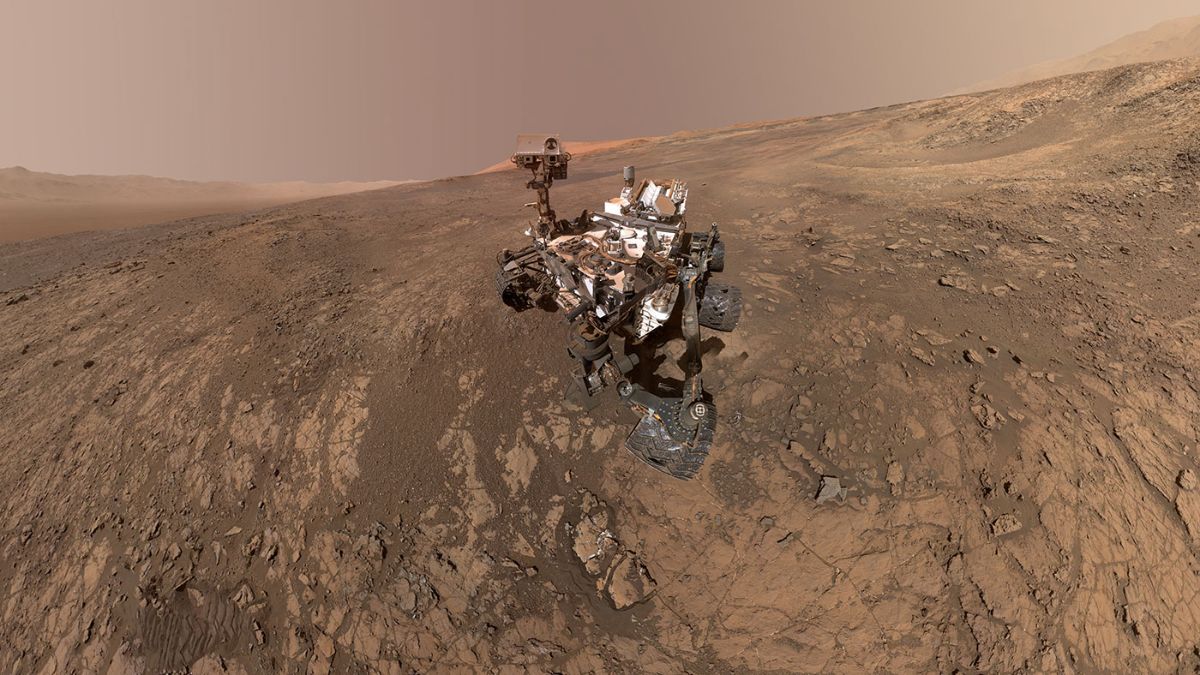
Instruments like the SAM (Sample Analysis at Mars) on the Curiosity rover have studied Martian air and rocks for over ten years. Their findings show that up to 80% of the planet’s atmosphere was likely stripped away by solar wind — not bombs. Mars lost its magnetic field billions of years ago, making it vulnerable to radiation from the Sun.
This process also explains the presence of xenon-129. It wasn’t from a war — it was from natural atmospheric escape.
Radioactive Elements
As for the thorium, uranium, and potassium found on Mars? Yes, they exist — but they’re naturally occurring. NASA’s Mars Odyssey orbiter mapped their distribution, and the patterns matched ancient lava flows, not explosion sites.
We’ve even seen similar natural radioactive activity here on Earth. In Gabon, Africa, there’s a fossil nuclear reactor called Oklo that formed naturally 1.7 billion years ago. So, Mars having radioactive materials doesn’t mean there were reactors or weapons.
The truth is a lot less dramatic — but far more scientific.
The Face on Mars
Let’s go back to that iconic photo — the “Face on Mars.” When Viking 1 sent the original image in 1976, the low resolution made the rock formation look like a giant sculpture.
But later, higher-resolution images taken by other missions showed something different: a hill, eroded by wind and time, with no face at all. It was just an optical illusion — a classic case of pareidolia, where our brains see patterns that aren’t really there.
Real History
What science has proven is that Mars once had a much richer past. Around 3.5 billion years ago, the planet had rivers, lakes, and even oceans. It likely had a thicker atmosphere and a magnetic field that protected it from the solar wind.
But over time, it lost its ability to shield itself, and the atmosphere was blown away. The result? A dry, cold planet with rusty soil and giant volcanoes like Olympus Mons — the tallest in the solar system.
That’s not science fiction — that’s fact.
Search
So, does that mean Mars never had life? Not necessarily. NASA and ESA (the European Space Agency) are working on missions like ExoMars and Mars Sample Return, which will bring back Martian rocks sealed from contamination.
These rocks will be analyzed for biosignatures — chemical signs that life once existed. If life did emerge on Mars, it most likely died out due to the harsh climate changes — not because of ancient wars.
Imagination vs. Reality
There’s something about Mars that fuels the imagination. A red planet with lost oceans, strange landforms, and mysterious readings? It’s no wonder people have come up with wild theories.
But while ancient Martian civilizations and interplanetary wars sound exciting, the truth about Mars is still deeply fascinating — and it’s grounded in science.
As technology improves and missions like Curiosity and Perseverance continue exploring, who knows what we’ll find next?
FAQs
Was there a nuclear war on Mars?
No, NASA confirms the theory lacks scientific evidence.
What is xenon-129 on Mars?
A rare gas likely caused by solar wind, not explosions.
What was the ‘Face on Mars’?
A rock formation that looked like a face due to shadows.
Does Mars have radioactive elements?
Yes, but they’re natural and tied to ancient lava flows.
Could Mars have supported life?
Yes, it had water and may have had habitable conditions.