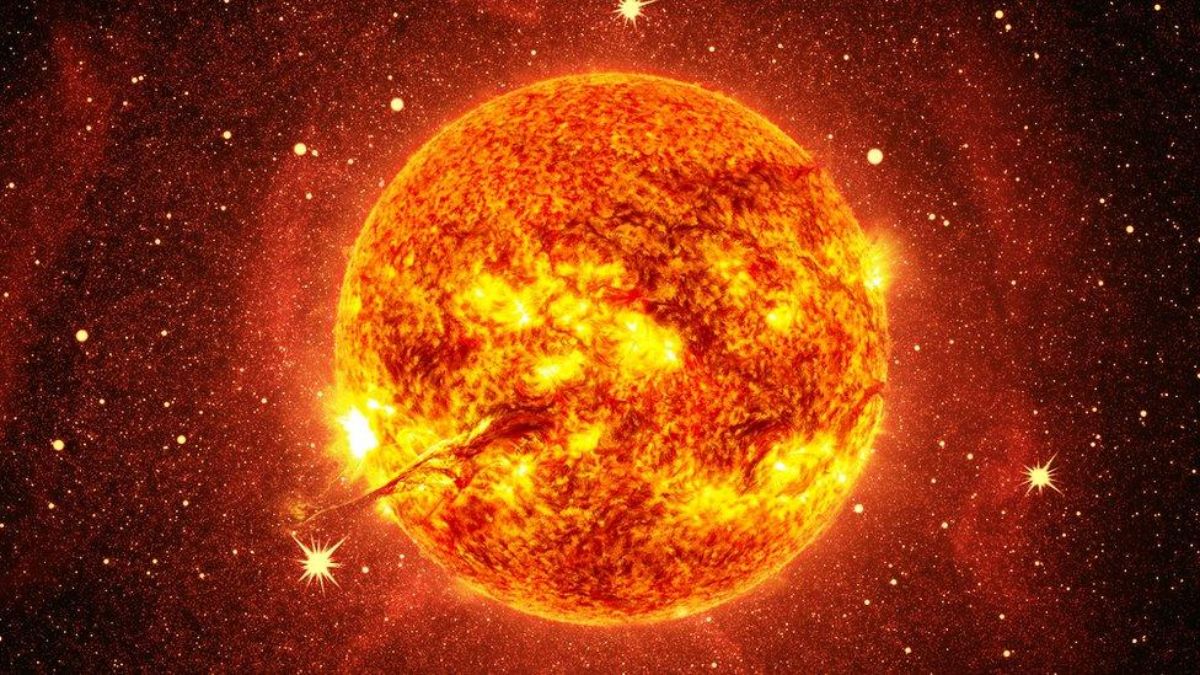
NASA has just unveiled an incredible image of the Sun’s surface—like nothing we’ve ever seen before. Thanks to cutting-edge technology and the help of the Daniel K. Inouye Solar Telescope, solar scientists are now able to study tiny magnetic structures that were once invisible. These new discoveries could completely shift how we understand solar activity, like eruptions, solar storms, and even mysterious changes on the Sun’s surface.
Table of Contents
Pretty wild, right? We’ve been watching the Sun for centuries, but now we’re seeing it in a whole new light—literally. Let’s cut into how this all happened and why it matters to us here on Earth.
Telescopes
You’ve probably heard about NASA missions and some famous telescopes like Hubble or Webb. But this mission highlights the power of a different telescope: the Daniel K. Inouye Solar Telescope.
With this tool, scientists got their clearest look yet at the Sun’s surface—and what they found has left everyone amazed. The Sun, as it turns out, is even more complex than we thought.
Inouye
The Daniel K. Inouye Solar Telescope may not be a household name, but it’s currently the most powerful telescope ever built to observe the Sun. Developed by the National Science Foundation (NSF), it officially began operations in 2022.
Located in Hawaii, this solar telescope features a massive 13.12-foot (4-meter) mirror. That size matters because it gives astronomers the ability to zoom in on tiny details that would otherwise go unnoticed. And when we’re talking about a star as massive and active as the Sun, every small detail counts.
Discovery
So what exactly did scientists see? The telescope revealed what looked like endless solar threads or “curtains” spread across the Sun’s surface. These formations are incredibly thin—just 12.43 miles wide—and had never been observed before.
But these aren’t just pretty patterns. These tiny “solar curtains” are actually strands of magnetic fields. They’re the force behind a lot of what happens on the Sun, including why some parts of its surface appear darker or lighter.

Even more fascinating, knowing these magnetic threads could help us learn more about solar flares, space weather, and how solar storms affect life on Earth.
Tools
Although the Daniel K. Inouye Telescope was the star of the show, it wasn’t alone. NASA and its partners used a team of four powerful telescopes to piece this discovery together:
| Telescope Name | Main Use |
|---|---|
| Daniel K. Inouye Telescope | High-res images of Sun’s surface |
| Hubble Space Telescope | Capturing very detailed images |
| James Webb Space Telescope | Observing deep space, galaxies, and rare light |
| Zwicky Transient Facility | Detecting solar flashes, explosions, and twinkles |
Together, these tools gave scientists a complete, multi-layered view of the Sun, which helped them discover and confirm the presence of those magnetic “solar curtains.”
Impact
Why should we care about something that’s happening 150 million kilometers away? Because what happens on the Sun doesn’t stay on the Sun.
Solar activity—especially storms and flares—can disrupt communication signals, knock out GPS services, and even damage power grids. Ever heard of blackouts caused by solar flares? That’s real.
And if satellites get affected, so does everything from weather forecasting to the TV channels we watch. That’s why this research matters. Knowing how the Sun’s magnetic field behaves helps scientists predict solar activity and better prepare us for its impact.
Awareness
We often scroll past space news thinking, “That doesn’t affect me.” But space weather is real, and it’s already influencing your daily life more than you realize. The more we learn, the better prepared we can be. And discoveries like this one aren’t just about science—they’re about protection and preparation.
Today we’re learning more about the Sun, but tomorrow’s headlines could be about how Earth is directly impacted by that activity. So yes, pay attention. Because knowing the universe helps us know our own planet better, too.
FAQs
What did NASA discover on the Sun?
Tiny magnetic structures called solar curtains.
What telescope took the new images?
The Daniel K. Inouye Solar Telescope.
Why are solar curtains important?
They help explain solar activity and storms.
Can solar storms affect Earth?
Yes, they can disrupt signals and power grids.
Where is the Inouye Telescope located?
It’s located in Hawaii.