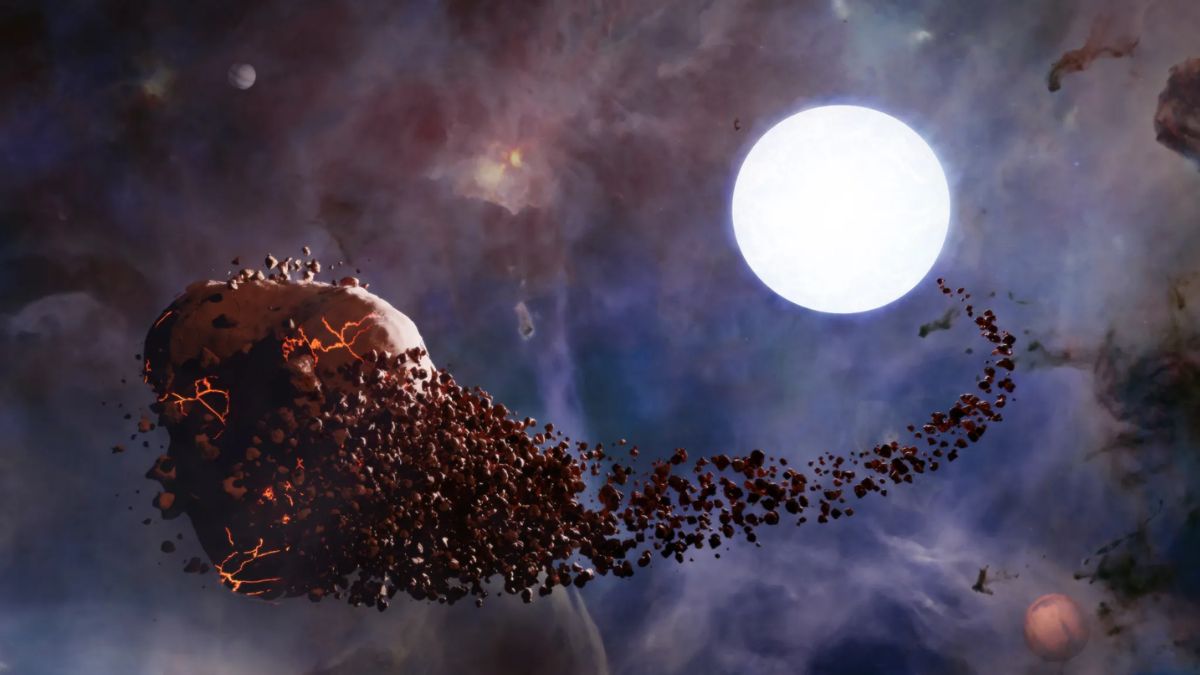
Space has a way of surprising us when we least expect it. And that’s exactly what happened with the discovery of a strange exoplanet known as YSES-1c. Scientists are scratching their heads over something they never thought they’d see: a young planet completely covered in mineral dust — something that, by all logic, shouldn’t still exist.
Table of Contents
This discovery doesn’t just raise eyebrows — it challenges our understanding of how planets form and evolve. So, what makes YSES-1c so unusual? Let’s break it down and look into what it means for astronomy, the universe, and our future in space exploration.
Exoplanets
First things first — what exactly is an exoplanet?
An exoplanet is any planet that orbits a star outside our solar system. Some of them are small and rocky like Earth, while others are huge and made of gas, like Jupiter. By studying exoplanets, scientists get a better picture of how planets are born, how they change over time, and even whether life could exist elsewhere in the universe.
YSES-1c
The star of the show — quite literally — is YSES-1c, a planet orbiting a very young star just 16 million years old. To put that into perspective, our Sun is around 4.5 billion years old. So, in cosmic terms, this planet is a baby.
And yet, despite its young age, YSES-1c has clouds of mineral dust in its atmosphere. This dust is made up of tiny particles of magnesium silicate and iron. That’s not too weird — except for one thing: this kind of dust isn’t supposed to last more than 5 million years. But there it is, floating around a 16-million-year-old planet like it just formed yesterday.
Contradiction
So, why does this matter?
Because it completely goes against what scientists believed. Until now, most theories said that mineral dust in planetary atmospheres would disappear pretty quickly, especially on young planets. But YSES-1c has proved that wrong.

Even more impressive, the planet shows the strongest silicate absorption ever recorded on an exoplanet. That means the chemical signature — the proof of those minerals — is far more powerful than anything we’ve seen before.
This isn’t just a minor detail. It could change how we think about how planets are formed and how long they keep their early materials. In short, this one discovery may rewrite parts of planetary science.
Sibling
And then there’s YSES-1b.
This planet is like the sibling of YSES-1c — both orbit the same star, and both were formed around the same time. But they’ve grown up very differently. YSES-1b also has mineral dust, but its atmosphere and cloud properties are not the same.
This proves something big: even when planets are born in the same place, under the same conditions, they can turn out totally different. Kind of like siblings in a family — similar origins, different personalities.
Impact
So, what does all this mean for astronomy?
The YSES-1c discovery matters a lot more than it might seem. Here’s what scientists hope to learn from it:
- Why some planets hold on to mineral dust much longer than expected
- How to improve models that simulate how planets form and evolve
- How these distant worlds compare to planets in our own solar system
This discovery reminds us that every new exoplanet found is like a piece of a giant cosmic puzzle. And sometimes, those pieces don’t fit where we thought they would.
NASA, ESA, and other space agencies are now closely watching the YSES system for more clues. These dust clouds have opened a whole new chapter in planetary research.
Wonder
At the end of the day, YSES-1c is a powerful reminder of how little we really know about the universe. Just when we think we have something figured out, a strange young planet pops up and says, “Think again.”
The fact that it’s covered in dust that shouldn’t even be there is both confusing and thrilling. And while scientists dig into the technical questions, the rest of us can’t help but wonder: What else is out there waiting to be discovered?
One thing is for sure — the YSES-1c and YSES-1b planets are far from ordinary. And if they’re any sign of what’s to come, the universe still has plenty of surprises left in store.
FAQs
What is the YSES-1c exoplanet?
A young planet with unexpected mineral dust clouds.
Why is YSES-1c surprising?
Its dust clouds should’ve vanished millions of years ago.
What is silicate absorption?
It’s a sign of mineral dust in a planet’s atmosphere.
How old is the YSES-1c system?
Only 16 million years old, very young in cosmic terms.
What makes YSES-1b different?
It has dust too but with different atmospheric features.